
Part 4of 16
God the Mother
Why did the Spirit descend as a dove? An eleven-point biblical questionnaire on the identity of the Holy Spirit within the Trinity.
Scripture: 1 Peter 1:3John 3:5–7Matthew 3:16
Studies
Study the mysteries woven through Scripture
Each study gathers the passages, history and symbolism behind a theme — and links to the articles, episodes and book chapters that explore it.
All studiesFeatured Study
The Breath of God, the Comforter, and the least understood Person of the Trinity
For centuries the Holy Spirit has been the least understood Person of the Holy Trinity. This study gathers the names, symbols and works Scripture attributes to the Spirit — and presents Yona Tree's distinctive conclusion about Her nature.
A note on interpretation. The feminine-personal interpretation of the Holy Spirit presented on this page is a distinctive theological position developed by Yona Tree. It is not shared by every Christian tradition. We invite you to study the cited Scriptures and historical sources for yourself, and to seek God in prayer as you do.
Names & offices
The Nicene Creed confesses the Holy Spirit as “the Lord, the giver of life,” who “with the Father and the Son is worshipped and glorified, who has spoken through the prophets.” Scripture shows the Spirit at work from the first verses of Genesis — “the Spirit of God moved upon the face of the waters” (Genesis 1:2) — to the last invitation of Revelation: “the Spirit and the bride say, Come” (Revelation 22:17).
Yet the Spirit remains the most mysterious Person of the Trinity. Much of what Scripture reveals about the Spirit comes through symbol and allegory — a dove, a wind, fire, water, a lampstand, a tree. Seven Lamps Before the Throne was written to gather those images and ask what they reveal together.
The heart of Yona Tree’s study is the Spirit’s work in birth. Jesus told Nicodemus that a man must be “born of water and of the Spirit,” and Nicodemus immediately thought of “his mother’s womb” (John 3:4–5). The Father begets; the Spirit gives birth; the Son is the only begotten. Walk through the eleven questions.
The dove at the baptism of Jesus, the hen gathering her brood, the eagle over her nest, the comforting mother of Isaiah 66:13, the wind that blows where it wills, the whirlwind of Ezekiel’s vision, the seven lamps before the throne, and the Tree of Life — Yona Tree reads all of these as portraits of one Person. Explore the dove, the hen and the eagle.
English Bibles call the Spirit “He.” Greek uses a neuter word for spirit and a masculine word for Comforter; Hebrew and Aramaic use feminine words. Yona Tree’s position is that grammar alone does not settle the question either way. Read The Pronoun Problem.
Whatever you conclude, the Spirit’s invitation is the same: to be born again, filled, comforted and led into the truth. “If ye then, being evil, know how to give good gifts unto your children: how much more shall your heavenly Father give the Holy Spirit to them that ask him?” (Luke 11:13).
Related content
Part 4of 16
Why did the Spirit descend as a dove? An eleven-point biblical questionnaire on the identity of the Holy Spirit within the Trinity.
Scripture: 1 Peter 1:3John 3:5–7Matthew 3:16
Part 8of 16
Jerome, Origen and the Old Syriac Gospels; the comforting mother, the sheltering hen, the mothering eagle; and Sarah, the free woman of Galatians 4.
Scripture: John 14:26Isaiah 66:13Luke 13:34
Part 7of 16
Why does the New Testament use "He" for the Spirit in John 14–16? Paracletos, pneuma, ruah — and the difference between grammatical gender and identity.
Scripture: John 14:26John 15:26John 16:7–8
Cornerstone Study
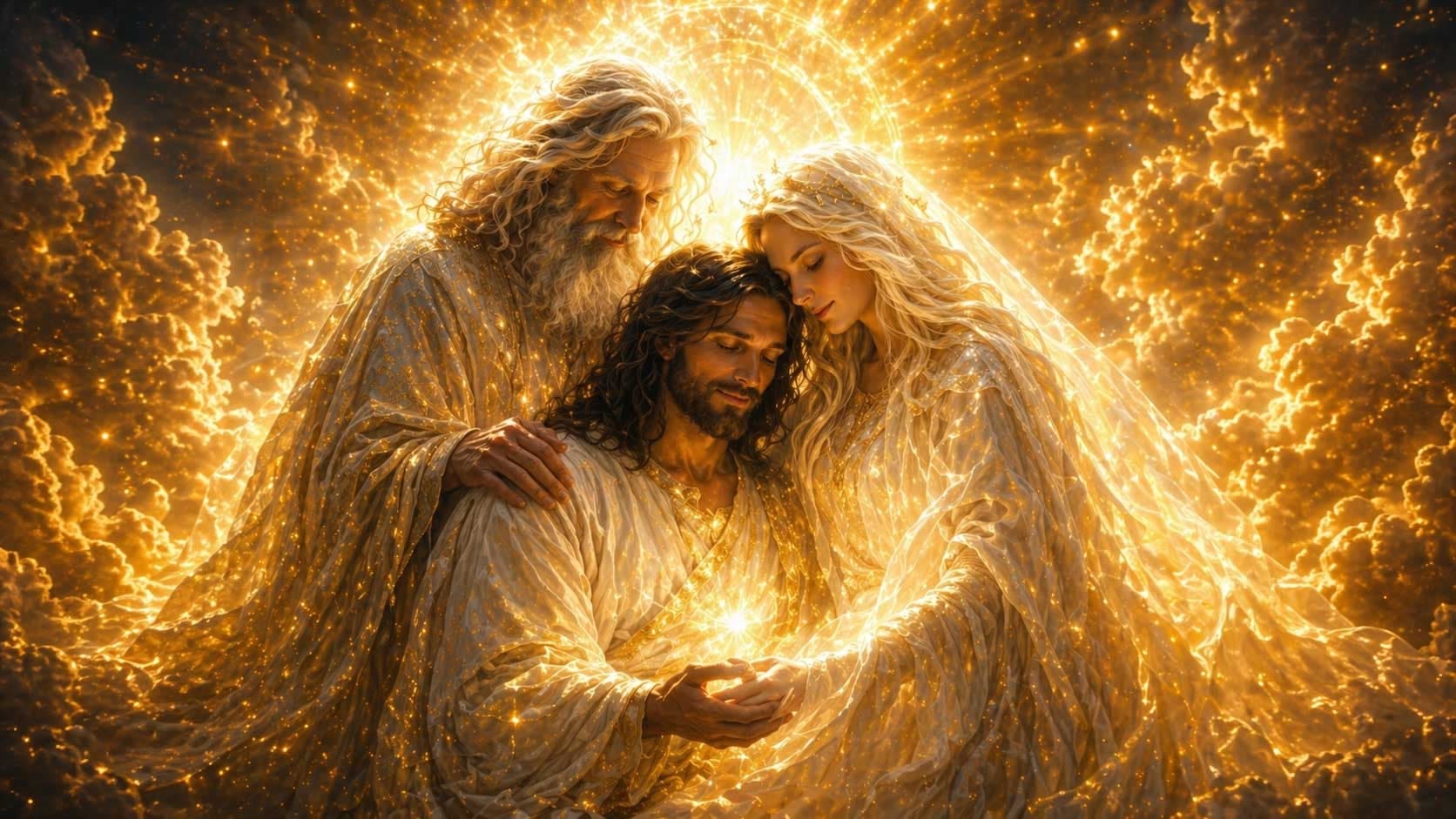
One God made manifest through three distinct Persons — equal in Godhood, distinct in office
Featured Study
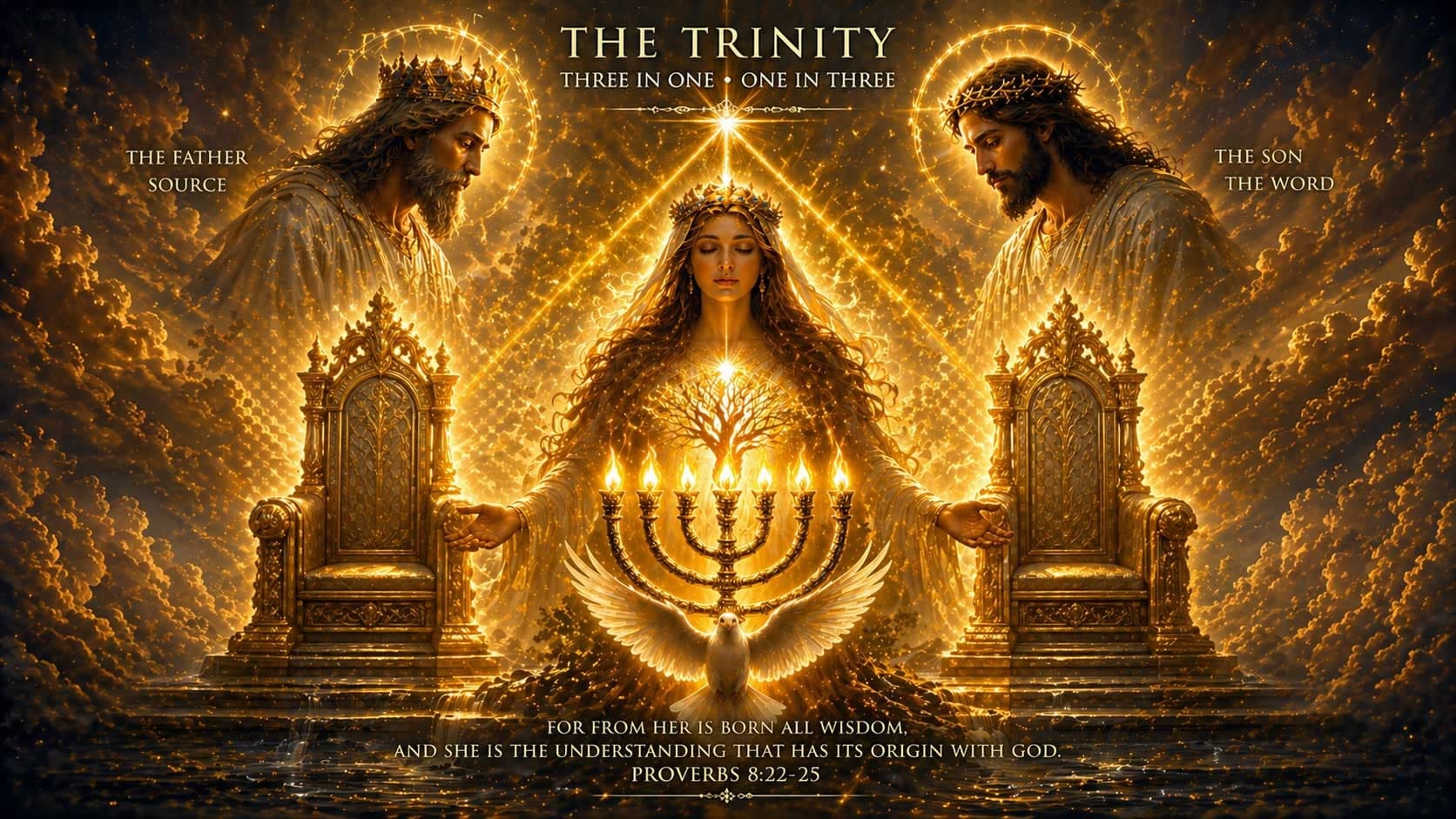
The Woman who calls herself Wisdom and Understanding — Proverbs 1, 3, 8 and 9
Featured Study
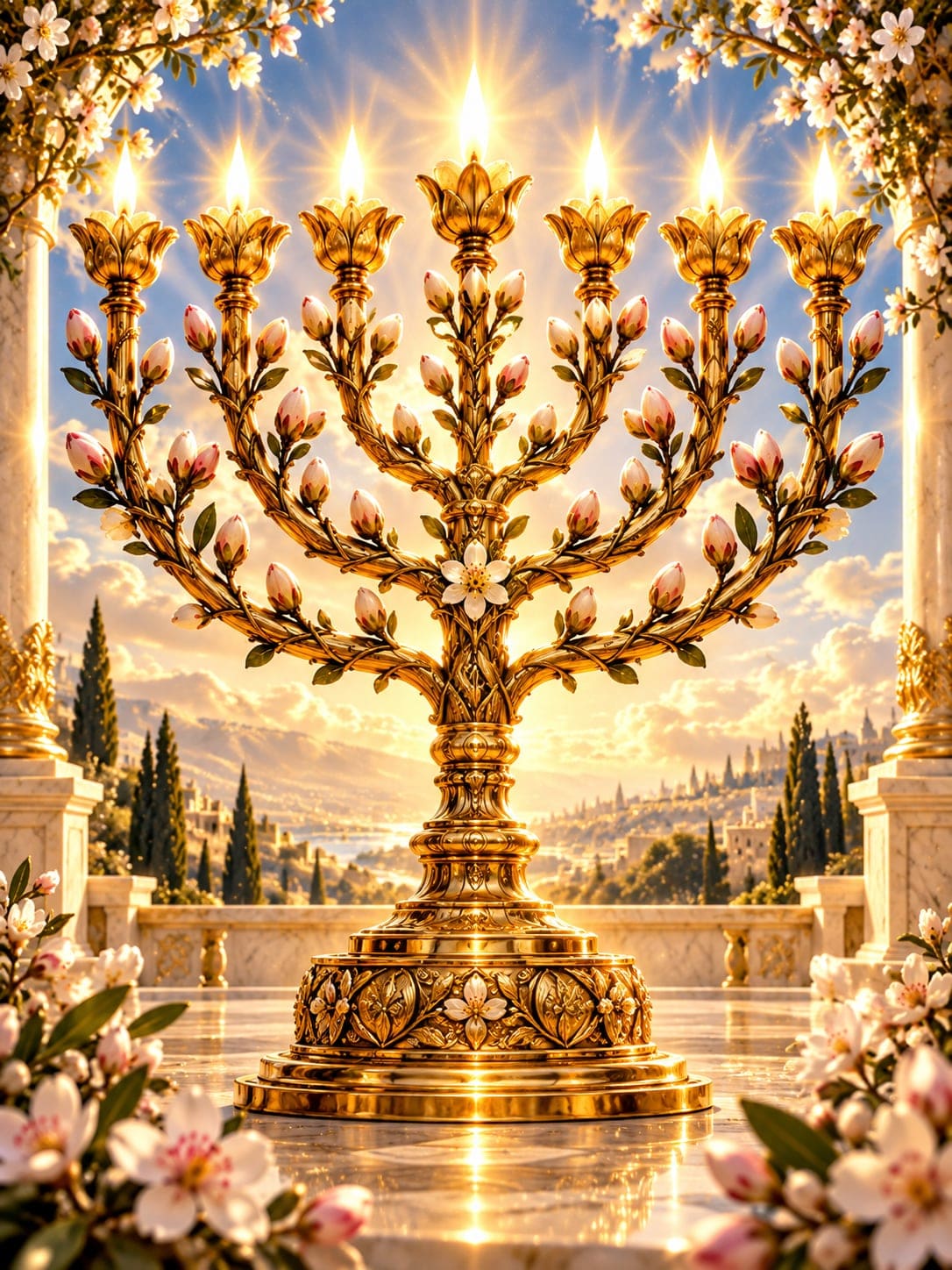
Revelation 4:5, Isaiah 11, the menorah and the sevenfold Spirit of God
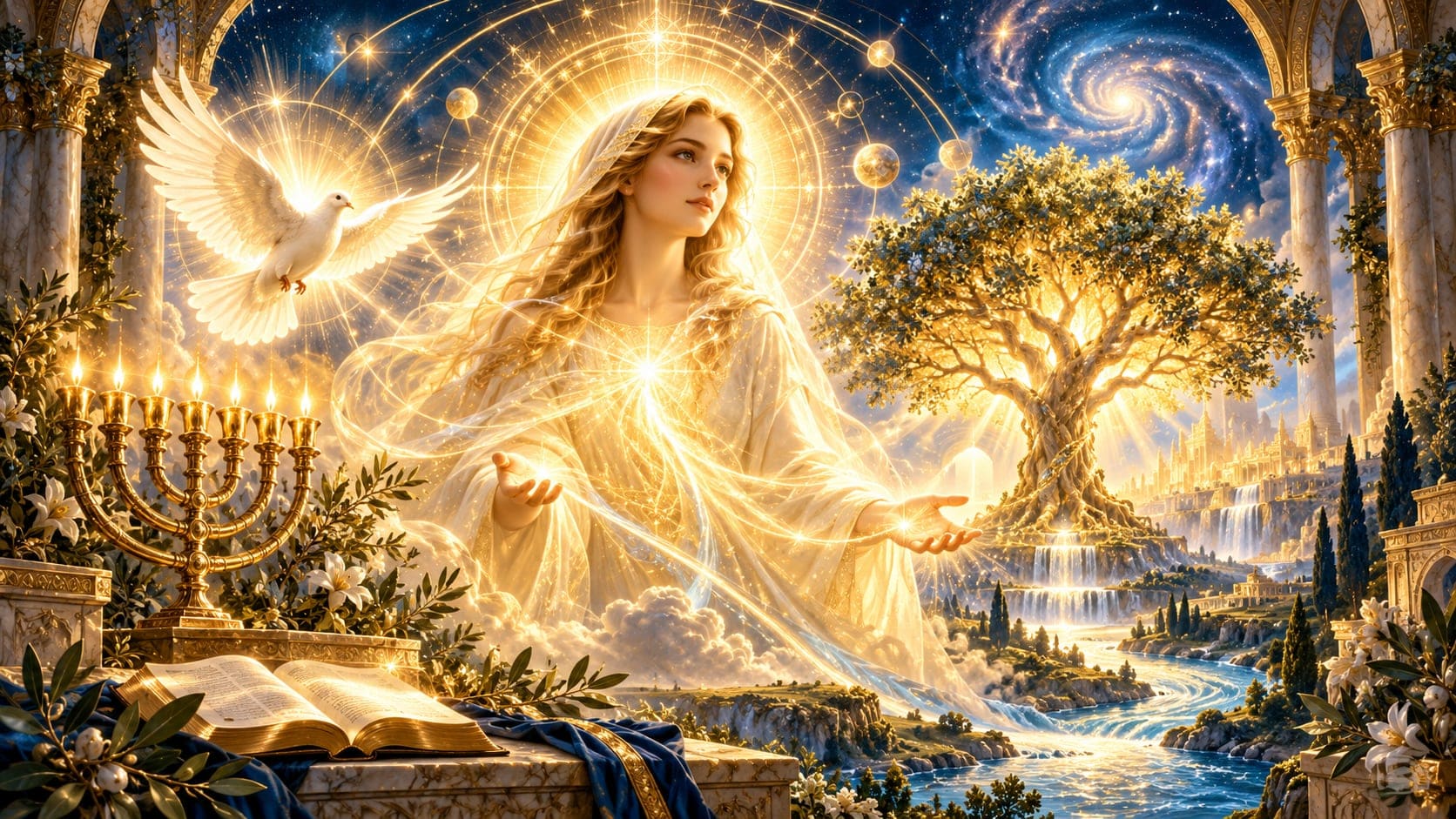
Why did the Spirit of God descend as a dove? Eleven simple questions, each answered from Scripture, lead toward one of the central conclusions of Yona Tree's study of the Holy Spirit.

"Jerusalem which is above is free, which is the mother of us all." Paul's allegory of Sarah and Hagar connects the free woman, the heavenly city, and the Spirit who gives believers new birth.
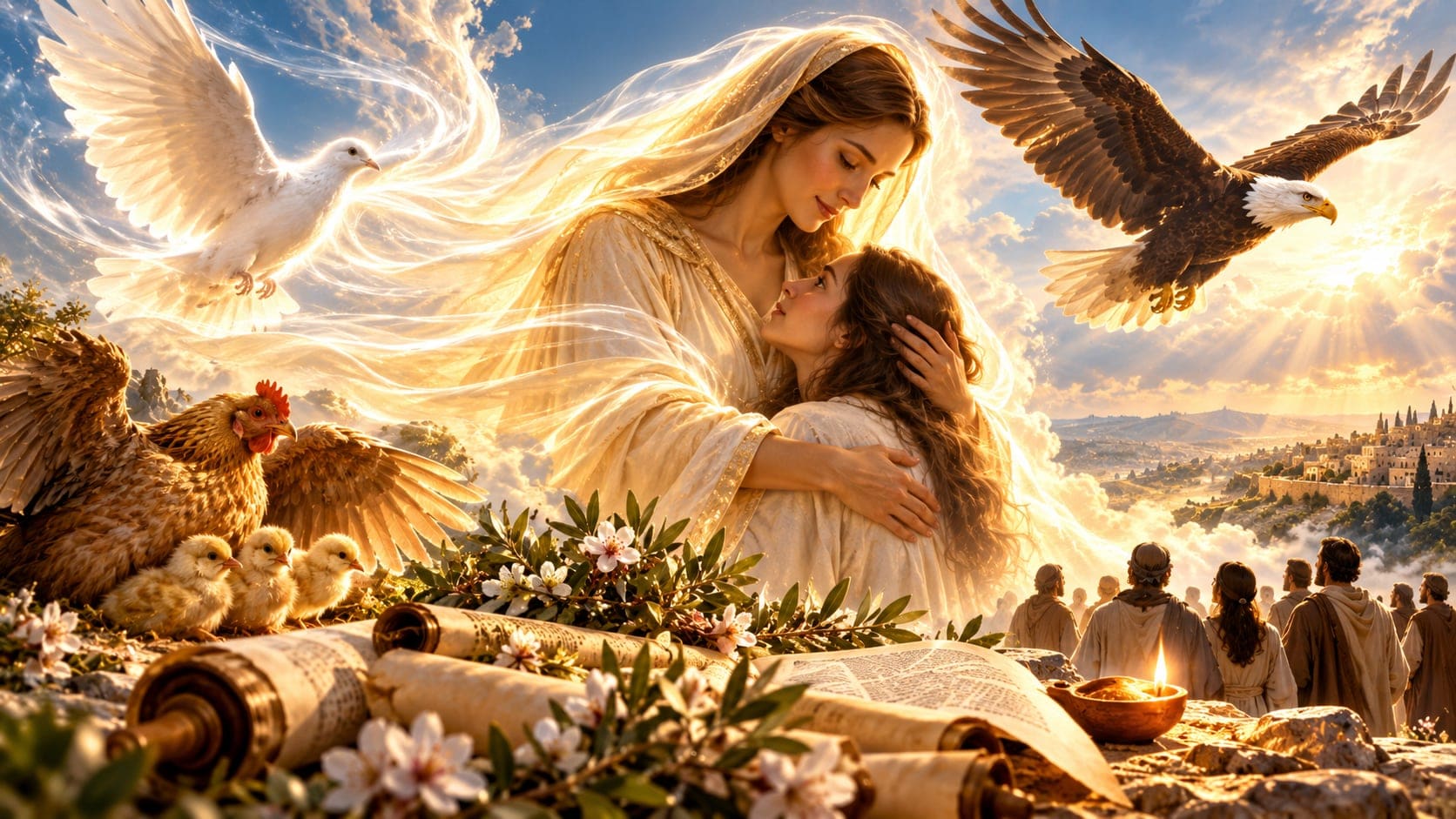
The anointing dove, the sheltering hen, the instructing eagle. Scripture reaches for mothering birds again and again when it describes God's care — and Yona Tree sees in them a portrait of the Holy Spirit.
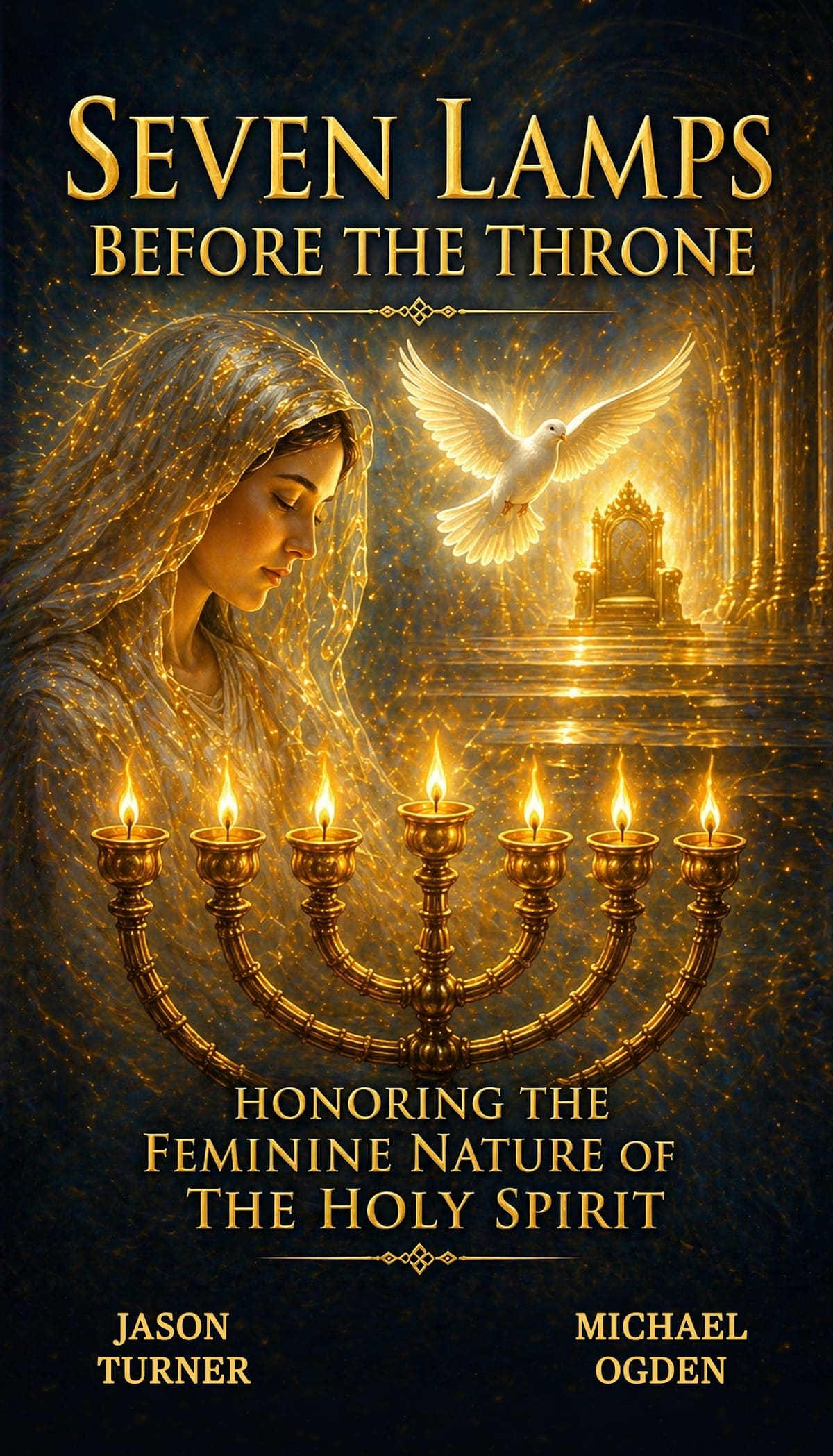
Read the book
Honoring the Feminine Nature of the Holy Spirit
by Jason Turner & Michael Ogden