The Lost Sheep, the Lost Coin and the Lost Son
Three parables, three seekers, one divine love — Luke 15 and the Holy Trinity
Luke 15 opens with a complaint. The tax collectors and sinners were drawing near to hear Jesus, and the Pharisees and scribes murmured, “This man receiveth sinners, and eateth with them” (Luke 15:2). Jesus answered with three parables — one story told three ways.
The lost sheep
A man with a hundred sheep loses one. He leaves the ninety and nine and goes after the lost one “until he find it,” then lays it on his shoulders rejoicing (Luke 15:4–5).
I say unto you, that likewise joy shall be in heaven over one sinner that repenteth, more than over ninety and nine just persons, which need no repentance.
The lost coin
A woman with ten pieces of silver loses one. She lights a candle, sweeps the house, and seeks diligently until she finds it (Luke 15:8).
And when she hath found it, she calleth her friends and her neighbours together, saying, Rejoice with me; for I have found the piece which I had lost. Likewise, I say unto you, there is joy in the presence of the angels of God over one sinner that repenteth.
A coin bears the image of its sovereign — “Whose is this image and superscription?” (Matthew 22:20). A human being bears the image of God (Genesis 1:27), and so carries an intrinsic value that the Seeker will not abandon.
The lost son
A younger son takes his inheritance, wastes it, and at last comes to himself in a far country.
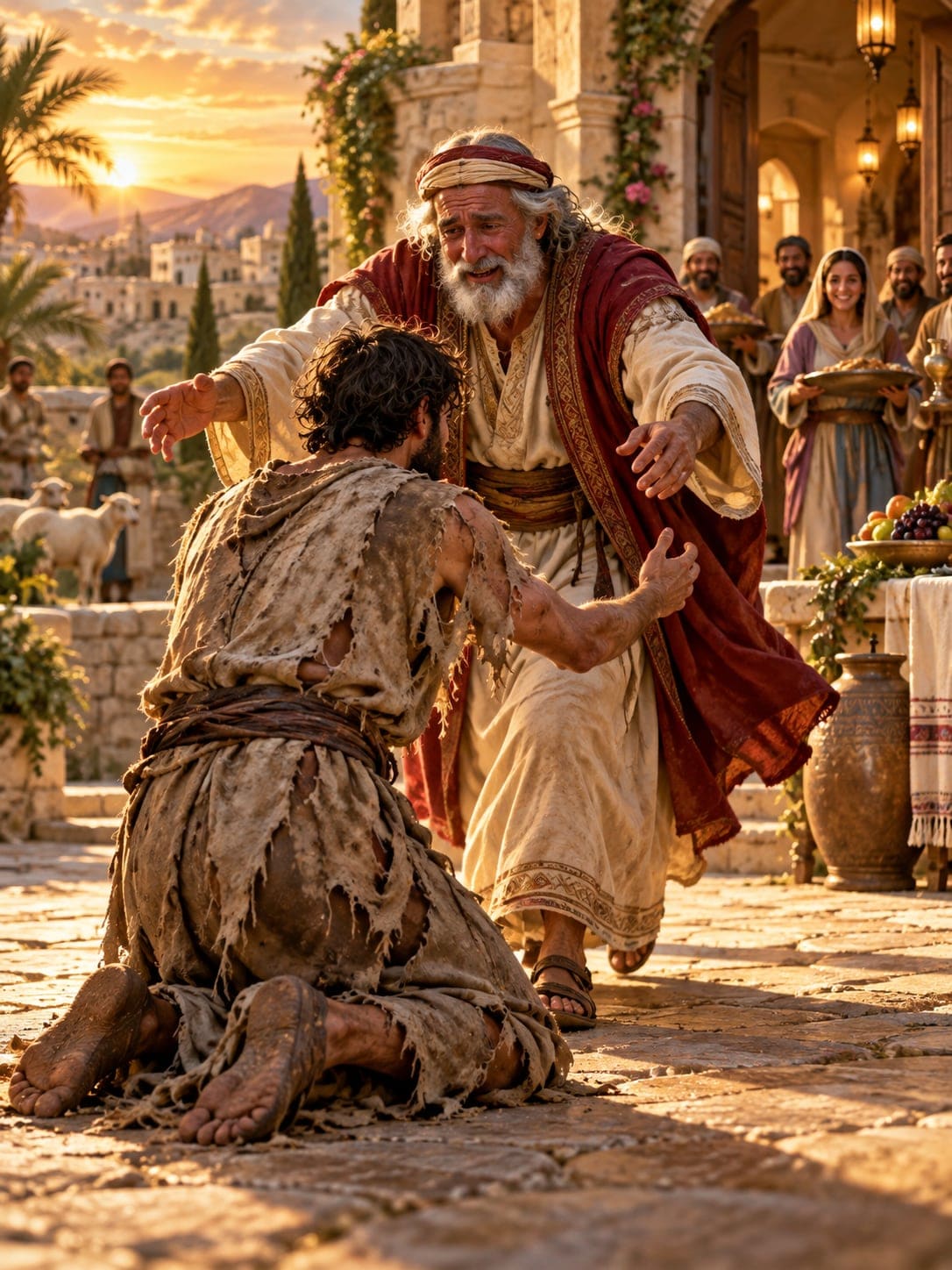
And he arose, and came to his father. But when he was yet a great way off, his father saw him, and had compassion, and ran, and fell on his neck, and kissed him… For this my son was dead, and is alive again; he was lost, and is found.
A sublime trinity of parables
A lost sheep, a lost coin, a lost child: Christ’s Church of once-wayward sinners, found by the grace and perseverance of three divine Seekers. A Shepherd, a Woman, a Father.
Come home
Are you that lost sheep? Are you the prodigal son or daughter who needs to come home? You can reach out to God in prayer today, using words much like the prodigal’s:
- Admit that you are a sinner in need of His forgiveness — “for all have sinned, and come short of the glory of God” (Romans 3:23).
- Accept the sacrifice Jesus made for your sins with His own blood on the cross — “Christ was once offered to bear the sins of many” (Hebrews 9:28).
- Trust in the power Christ proved He has over death when He rose from the grave — “I am he that liveth, and was dead; and, behold, I am alive for evermore” (Revelation 1:18).
- Ask God to save you and allow you to be born again through the Holy Spirit (John 3:3).
The salvation that comes from the Father, through the Son, by the transforming work of the Holy Spirit, is free. It cannot be earned, because it rests on the righteousness of Jesus Christ and not our own. “Not by works of righteousness which we have done, but according to his mercy he saved us, by the washing of regeneration, and renewing of the Holy Ghost” (Titus 3:5).
Notes
-
Ambrose of Milan, Exposition of the Gospel according to Luke, Book 7. ↩