Lady Wisdom in Proverbs 8: The Architect at the Father's Side
Possessed, poured out, brought forth — the Hebrew words behind Wisdom's testimony

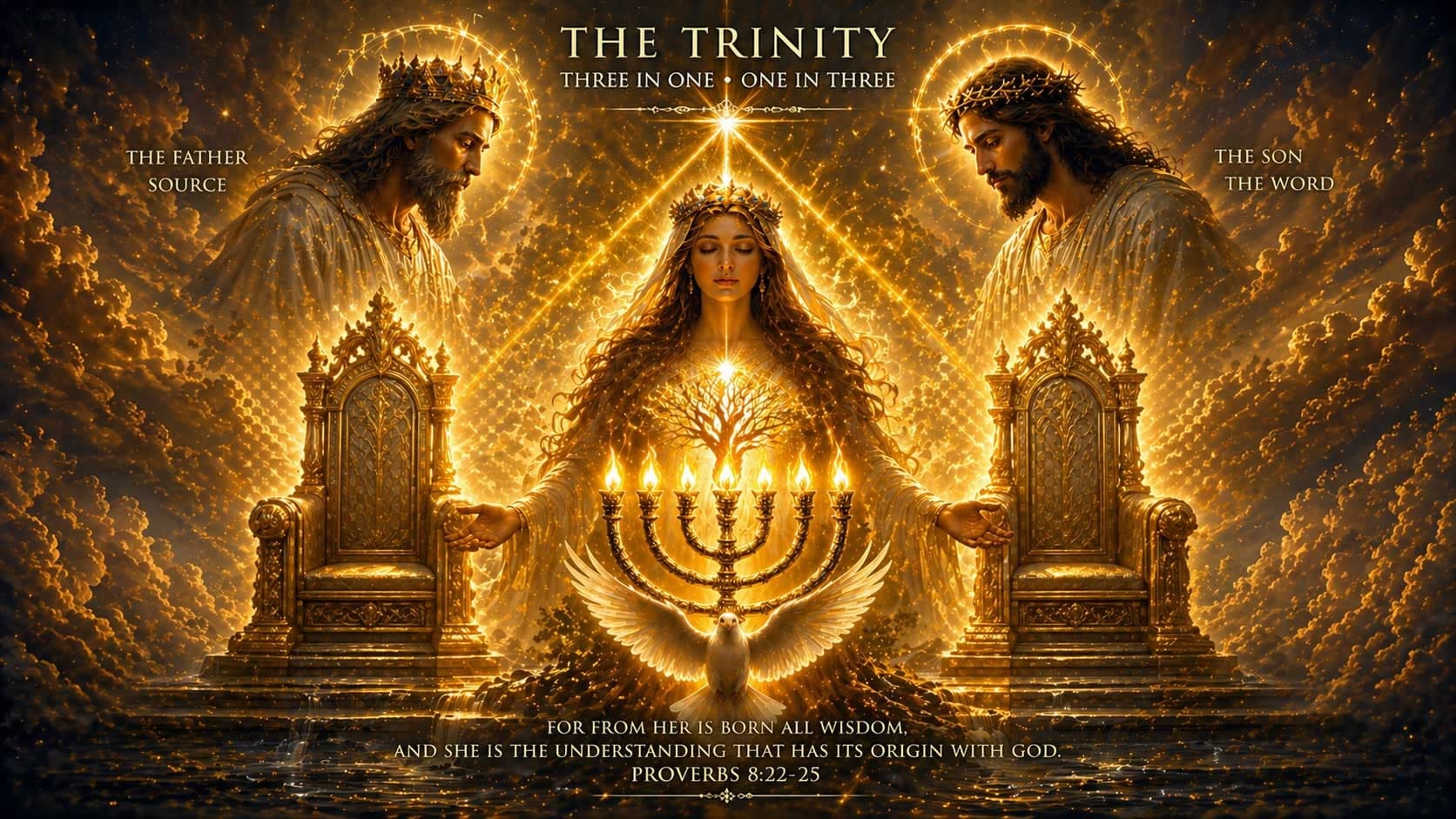
The book of Proverbs, written by the king Scripture calls the wisest who ever lived, contains a remarkable voice. A Woman stands at the gates of the city and cries out. She calls herself Wisdom and Understanding. She claims to be eternal, the companion of God, and the architect who stood beside Him in creation.
What the text says
Elsewhere she cries in the streets (Proverbs 1:20–23), is called “a tree of life to them that lay hold upon her” (Proverbs 3:18), and builds her house on seven pillars (Proverbs 9:1). “The LORD by wisdom hath founded the earth; by understanding hath he established the heavens” (Proverbs 3:19).
Four Hebrew words
Yona Tree’s study of Proverbs 8 turns on four words.
“Possessed” (v. 22). What does it mean that the LORD possessed Wisdom “in the beginning of his way”? The book suggests the possession of two who belong to one another — as a husband and wife belong to each other. Wisdom is the Father’s constant delight, abiding always at His side.
“Set up” (v. 23). The Hebrew nasak can mean to install — and also to pour out, as a drink offering is poured. Read that way, Wisdom says, “I have been poured out from everlasting.” Just as Eve proceeded from Adam, the Spirit proceeds — is poured out — from the Father.
“Brought forth” (vv. 24–25). The Hebrew chul (or hul) carries the sense of twisting or whirling.1 It recalls the prophet’s vision: “I looked, and, behold, a whirlwind came out of the north, a great cloud, and a fire infolding itself” (Ezekiel 1:4). The phrase there is ruach se’arah — literally a spirit-whirlwind. Before the fountains and depths existed, Wisdom says, she was whirling like a mighty rushing wind.
Genesis describes the same Spirit before creation: “the Spirit of God moved upon the face of the waters” (Genesis 1:2). The verb rachaph, “moved,” means to hover or brood — the same word used of the mother eagle that “fluttereth over her young” (Deuteronomy 32:11).
“One brought up” (v. 30). The Hebrew amon is most often understood as master workman or architect — “I was the architect at his side,” as one modern translation puts it.2 Psalm 33:6 names the two by which God made the universe: “By the word of the LORD were the heavens made; and all the host of them by the breath of his mouth.” The Word is the Son. The Breath is the Spirit.
An architect must know the mind of the one who commissions the work. “The Spirit searcheth all things, yea, the deep things of God… the things of God knoweth no man, but the Spirit of God” (1 Corinthians 2:10–11).
What history says
What Yona Tree proposes
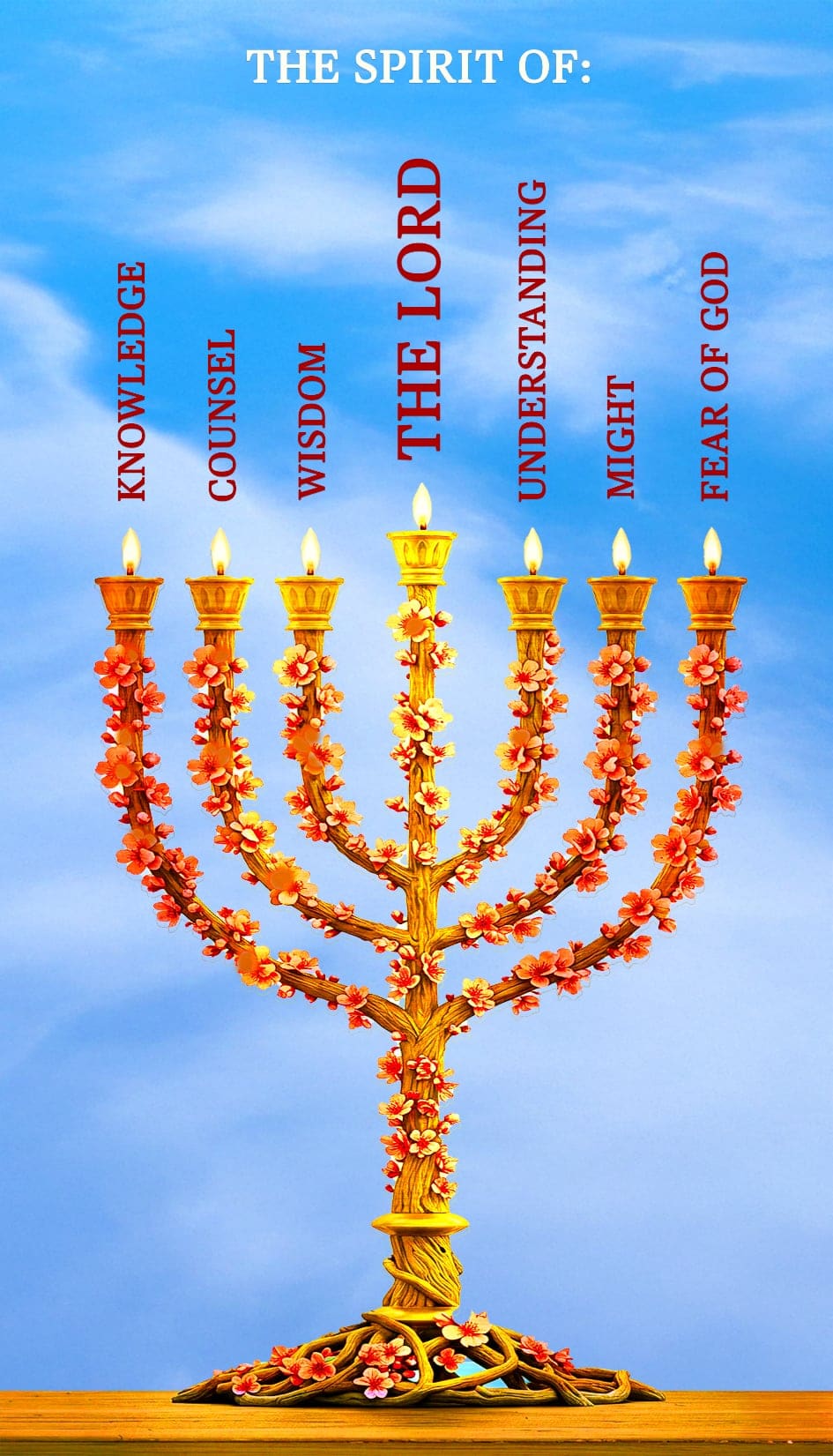
Whatever one concludes about Lady Wisdom, she identifies herself as not one but two attributes of the sevenfold Spirit — “wisdom” and “understanding” (Proverbs 8:1, 14) — while claiming the other five as her own: counsel, strength, knowledge, the fear of the LORD, and the LORD’s possession from the beginning. In Hebrew, these attributes are expressed with words that are largely feminine — chokmah, binah, etsah, gevurah, yirah — though, as with paracletos, the book’s argument does not rest on grammar.
Notes
-
Hebrew lexicons also connect chul with the writhing of labor and the bringing forth of a child, which is why English versions render it “brought forth.” ↩
-
Proverbs 8:30 in the New Living Translation. The King James Version’s “as one brought up with him” reflects an alternative reading of amon as a nursling or ward. ↩
-
Irenaeus, Against Heresies 4.20.3 (c. AD 180); Theophilus of Antioch, To Autolycus 2.15. ↩