What Is New Jerusalem?
What Revelation 21–22 says explicitly, what it may mean, and where speculation begins

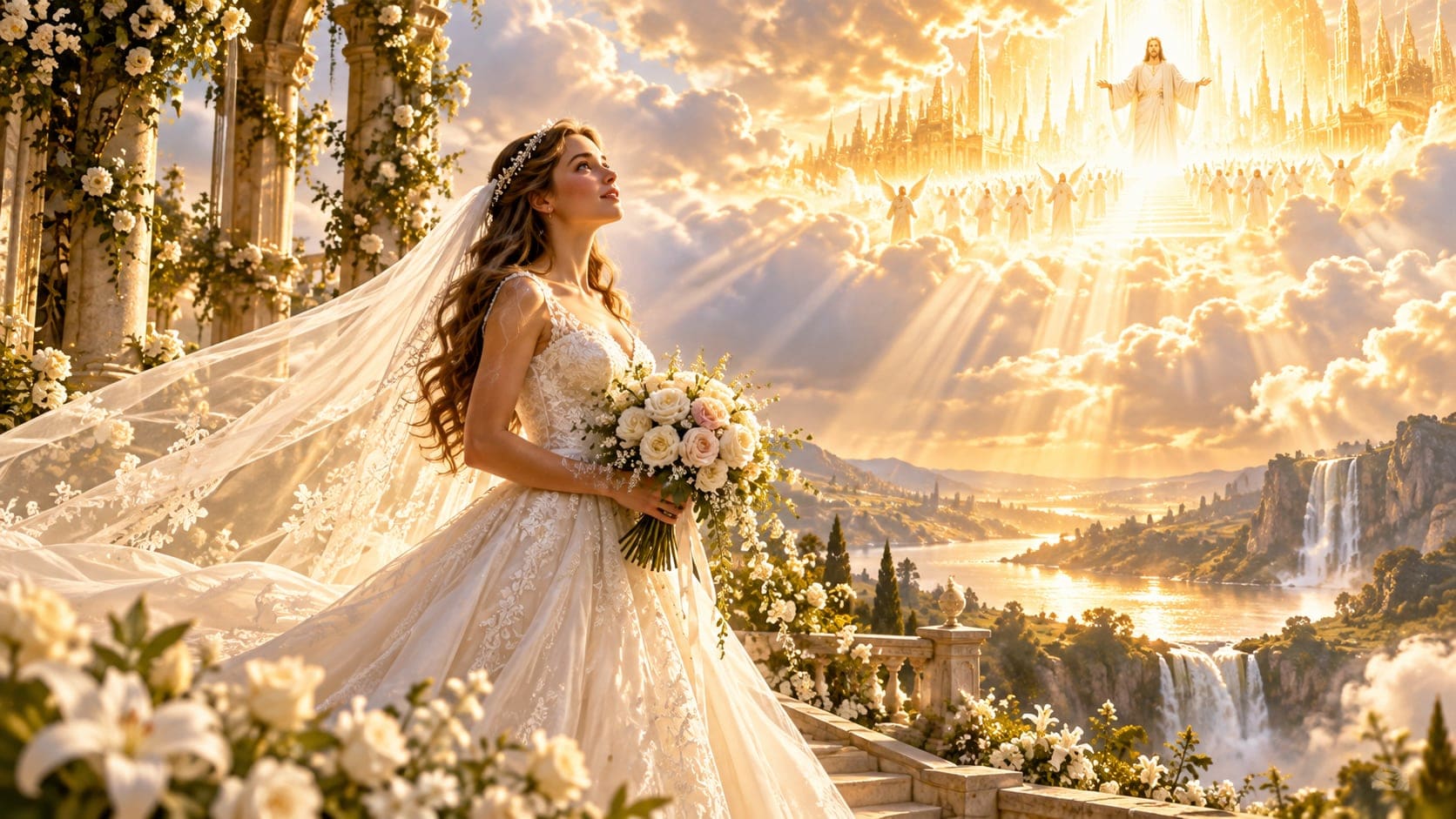
And I saw a new heaven and a new earth: for the first heaven and the first earth were passed away; and there was no more sea. And I John saw the holy city, new Jerusalem, coming down from God out of heaven, prepared as a bride adorned for her husband.
The final two chapters of the Bible describe the eternal home of God with His people. Few passages invite more speculation. This study tries to read slowly and honestly — noting what John actually says before asking what it may mean.
Explicit Scripture
Scripture says
The setting. A new heaven and a new earth; the first have passed away, and “there was no more sea” (21:1). The city comes down from God out of heaven (21:2, 10).
God with His people. “The tabernacle of God is with men, and he will dwell with them… And God shall wipe away all tears from their eyes; and there shall be no more death, neither sorrow, nor crying, neither shall there be any more pain” (21:3–4).
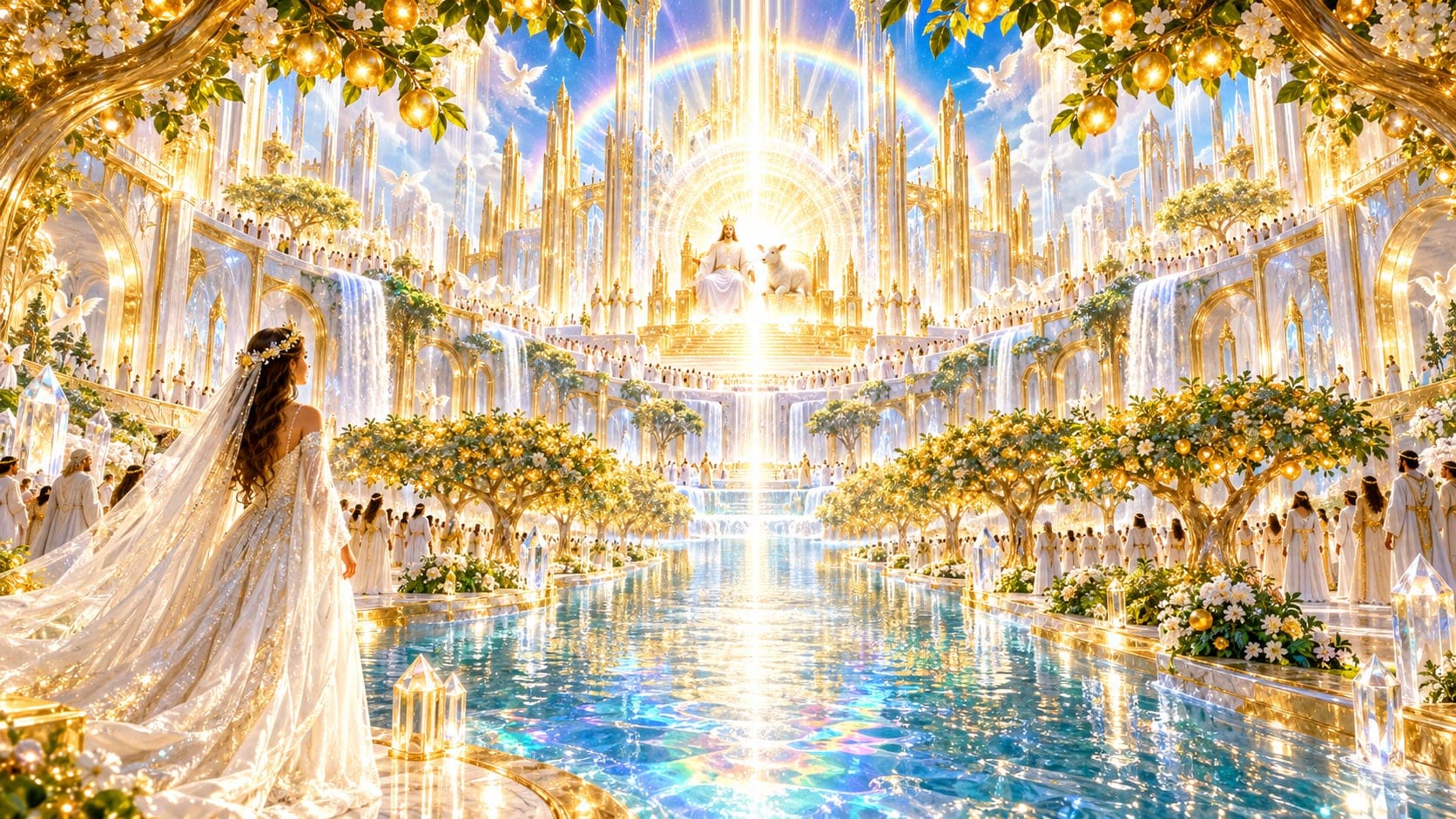
The Bride. The angel promises to show John “the bride, the Lamb’s wife,” and shows him the holy city (21:9–10).
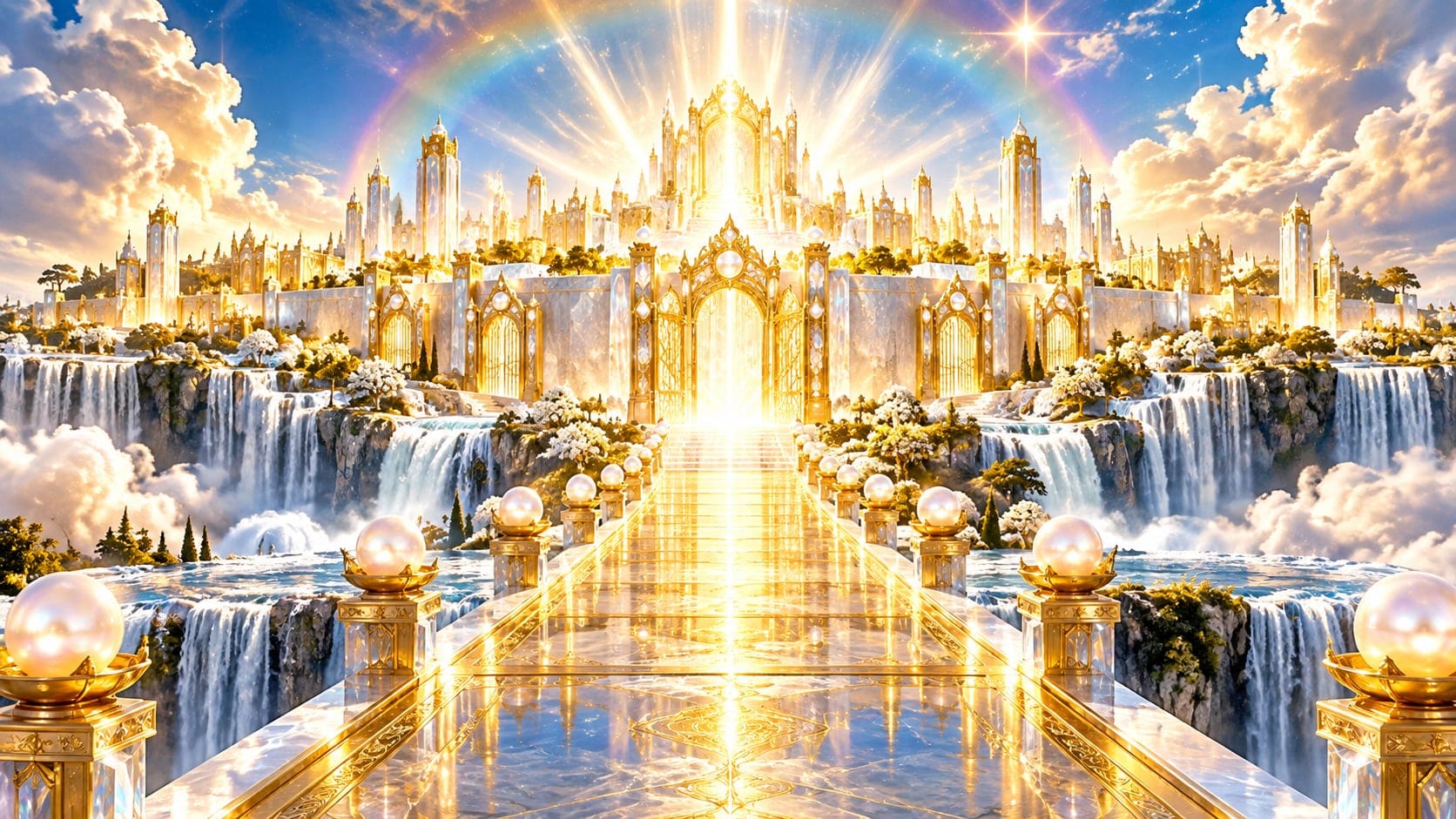
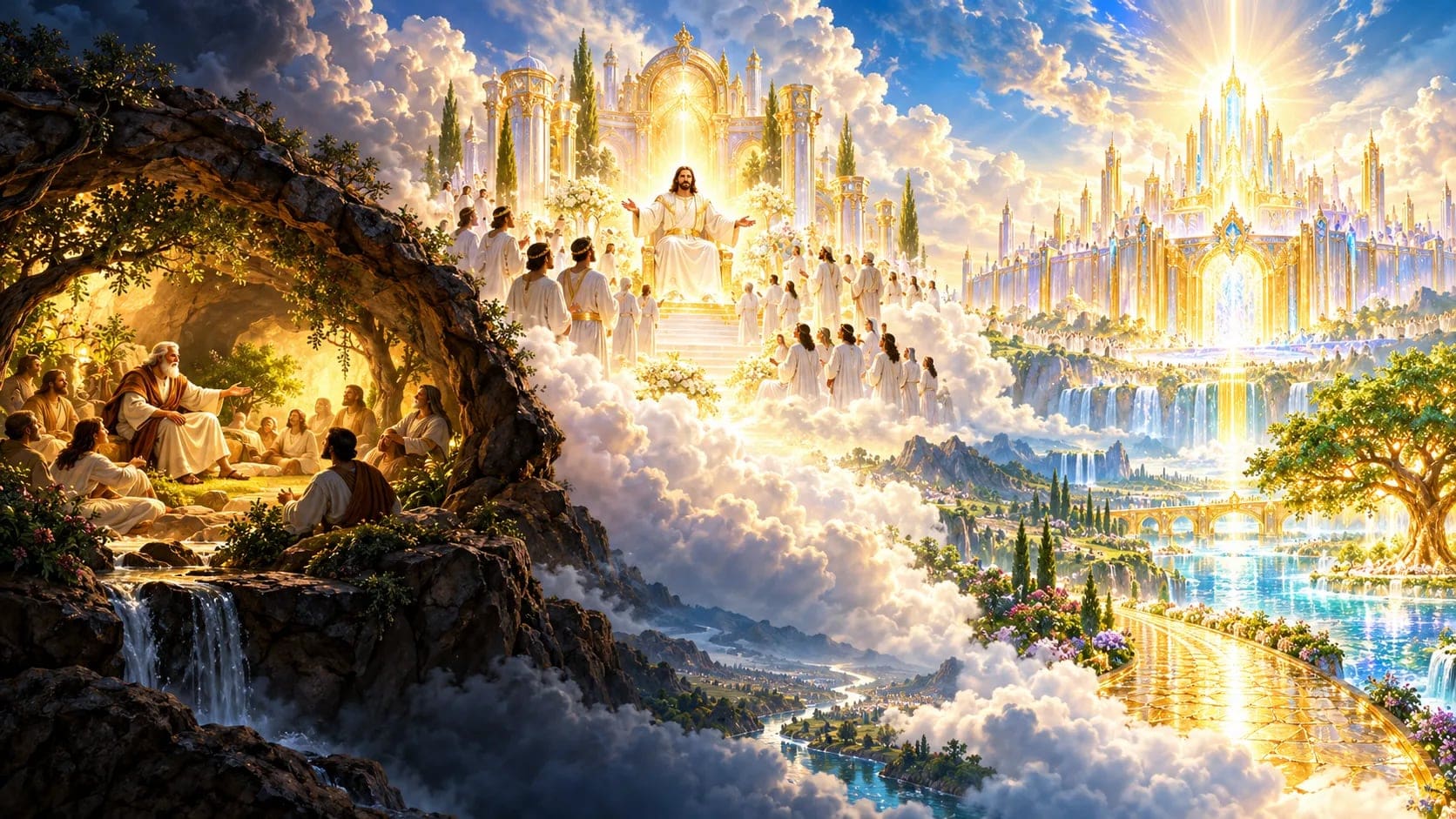
Walls and gates. A great and high wall with twelve gates, twelve angels at the gates, and the names of the twelve tribes of Israel written on them — three gates on each of the four sides (21:12–13). “Every several gate was of one pearl” (21:21).
Foundations. Twelve foundations bearing the names of the twelve apostles of the Lamb (21:14), garnished with twelve precious stones: jasper, sapphire, chalcedony, emerald, sardonyx, sardius, chrysolite, beryl, topaz, chrysoprasus, jacinth and amethyst (21:19–20).
Measurements. The city “lieth foursquare.” Measured with a golden reed, it is twelve thousand furlongs, and “the length and the breadth and the height of it are equal.” The wall measures a hundred and forty-four cubits (21:16–17).
Materials. The wall is of jasper; the city is “pure gold, like unto clear glass”; the street is “pure gold, as it were transparent glass” (21:18, 21).
No temple, no sun. “I saw no temple therein: for the Lord God Almighty and the Lamb are the temple of it.” The city has no need of sun or moon, “for the glory of God did lighten it, and the Lamb is the light thereof” (21:22–23). Its gates are never shut, for there is no night there (21:25).
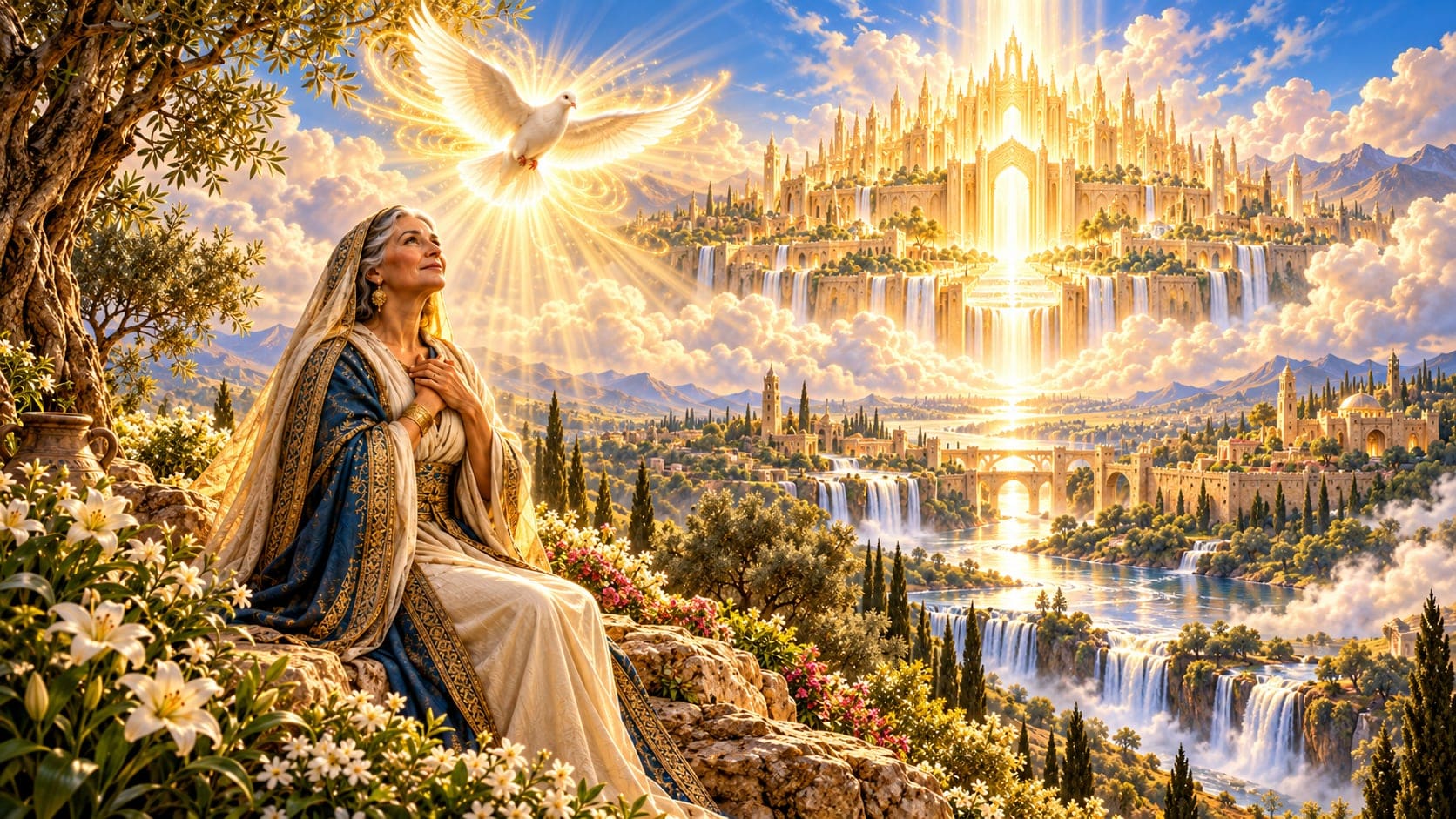
The river and the Tree. “A pure river of water of life, clear as crystal, proceeding out of the throne of God and of the Lamb.” On either side of the river is the Tree of Life, bearing twelve manner of fruits every month, “and the leaves of the tree were for the healing of the nations” (22:1–2).
The throne. There is no more curse; the throne of God and of the Lamb is in it; His servants serve Him, see His face, and bear His name on their foreheads (22:3–4).
Twelve thousand furlongs is roughly 1,400 miles (about 2,200 kilometres) — and a hundred and forty-four cubits is about 216 feet.
Possible interpretations
Possible interpretation
Numbers with meaning. Twelve runs through the whole vision — twelve gates, angels, tribes, foundations, apostles, stones and fruits — and 12,000 and 144 are multiples of twelve. Many readers see the people of God from both covenants united in one city: the tribes on the gates, the apostles in the foundations.
Possible interpretation
A Holy of Holies. The inner sanctuary of Solomon’s temple was a perfect cube, twenty cubits in length, breadth and height (1 Kings 6:20). A city whose length, breadth and height are equal may picture the whole city as the place where God dwells with His people — which is why it needs no temple.
Possible interpretation
Eden restored. The river and the Tree of Life return us to the garden of Genesis 2. What was guarded by a flaming sword (Genesis 3:24) is now open to the redeemed.
Speculation
Speculation
The shape. Because the length, breadth and height are equal, some picture the city as a cube and others as a pyramid. Scripture gives the measurements but does not draw the shape, and Christians hold both views — or read the measurements symbolically.
Speculation
Literal or symbolic. Readers differ on whether the dimensions and materials describe physical architecture, a symbolic portrait of the Bride, or both. It is wise to hold such questions loosely and keep hold of what is certain: God will dwell with His people.
The Jerusalem above and the New Jerusalem
Scripture speaks of a Jerusalem in heaven now. Paul writes that “Jerusalem which is above is free, which is the mother of us all” (Galatians 4:26), and the letter to the Hebrews says believers have come “unto mount Sion, and unto the city of the living God, the heavenly Jerusalem” (Hebrews 12:22). Abraham “looked for a city which hath foundations, whose builder and maker is God” (Hebrews 11:10).
Yona Tree proposes
The present heavenly Jerusalem, where the saints dwell after their earthly lives, will one day give way to the New Jerusalem of the new creation. Scripture compares the first to a mother (Galatians 4:26) and the second to a bride (Revelation 21:2). We read them as an elder and a younger Jerusalem — the Spirit and the Church, Mother and daughter.
How the righteous move from one dwelling to the next is the subject of the study Three Stages in the Dwelling of the Righteous. A visual guide to the city’s gates, foundations and river is part of the New Jerusalem study.